
Introduction
However, as technology continues to advance, the skills needed also change. In addition to traditional learning, children need to possess certain skills such as problem-solving and critical thinking, among others. STEM helps children develop various skills for their future careers and build confidence in themselves.
What is STEM & STEAM Education?
STEM stands for Science, Technology, Engineering, and Mathematics.
STEM integrates all of them by means of practical learning. Rather than learning in theory, kids learn how to integrate practically.
The Process of STEM Learning
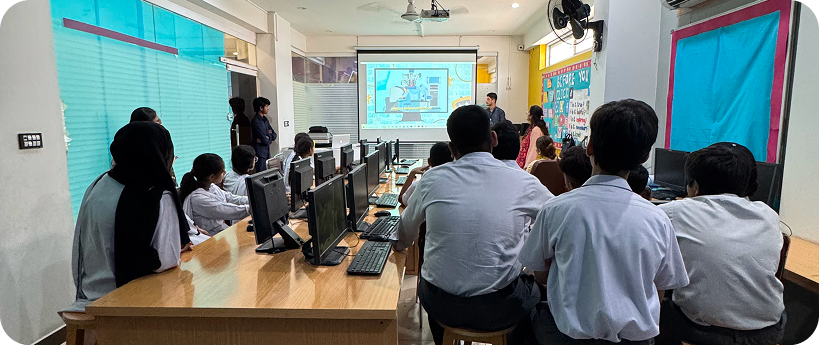
Usually, in traditional classrooms, children learn through books, lectures, and tests. Through STEM education, children will ask questions, conduct experiments, come to conclusions from mistakes, and practically apply their classroom knowledge.
STEM vs. STEAM
In opposition to the concept of STEM education, STEAM education incorporates five domains: Science, Technology, Engineering, Arts, and Mathematics.
The involvement of arts in the learning process enables learners to acquire knowledge using creativity, design, and innovation.
While STEM education emphasizes technical aspects, STEAM education enables learners to integrate both technical and creative skills.
Why STEM Education Is Important in Pakistan?
The use of technology, software, artificial intelligence, engineering, renewable energy, and digital entrepreneurship is rapidly growing in Pakistan
Closing the National Skills Gap:
Most classes still depend on memory-based learning. STEM focuses on understanding, experimenting, and creating rather than memorising concepts.
Preparing for a Digital Economy:
IT exports and technology in Pakistan are continuously developing each year. These professions require skills like:
Coding
Robotics
Analyzing Data
Engineering
Artificial Intelligence (AI)
Automation
An early education in STEM provides children with the necessary basics for these professions.
Competing on a Global Level
Countries worldwide introduce STEM into the curriculum to prepare students for international opportunities.
In order to provide Pakistani students with high-competency education, international careers, and innovation contests, schools have to introduce STEM ideas from an early age.
Key Benefits of STEM Education
- Develops Critical Thinking and Problem Solving
One of the key advantages of STEM education is that it teaches children how to think rather than what to think. STEM education helps students learn to:
- Investigate problems
- Explore solutions
- Analyze results
- Refine designs
Such critical thinking and problem-solving skills will remain useful for all stages of their lives, no matter which career path they choose.
- Develop Digital and Mathematical Literacy
Digital technologies have become integral for all professions. Through STEM education, children learn:
- Programming basics
- Robotics
- Engineering
- Logical thinking
- Mathematical thinking
Thus, children understand how to use numbers in solving real-life problems.
- Teaches Students to Innovate
One of the main advantages of STEM education is a hands-on approach to learning.
Children build such things as:
- Robotic cars
- Bridges
- Solar devices
- Electronic circuits
- Programmed devices
- Science experiments
Each successful project boosts self-confidence and teaches perseverance through trial and error.
- Improves Collaboration & Communication
Collaboration is a key feature of modern workplaces. Through STEM activities, kids engage in team projects where they practice how to:
- Exchange ideas
- Assign duties
- Offer solutions
- Achieve shared objectives
Such communication skills are useful throughout school and future careers.
- Promotes Brain Development & Curiosity at an Early Age
Kids are always curious about their surroundings. STEM develops their curiosity through investigation. Kids are taught to ask questions like:
- Why does it happen?
- How can we make it better?
- What would happen if we alter this?
Such curiosity improves cognitive skills.
- Foster an Entrepreneurial Mindset
One more great advantage of STEM education is that it fosters innovation. Kids learn to recognize issues in their surroundings and generate ideas that may help them solve problems concerning:
- Renewable energy
- Farming
- Medicine
- Water
- Smart technologies
STEM Learning vs Traditional Learning
| Feature | Traditional Learning | STEM / STEAM Learning |
|---|---|---|
| Core Method | Rote Memorization | Applied, Project-Based Learning |
| Student Role | Passive Listener | Active Innovator |
| Task Structure | Individual & Exam-Focused | Team Collaboration & Creation |
| Real-World Utility | Theory Focused | Problem-Solving Focused |
How to Introduce STEM Early to Pakistani Children?
Ages 3-6: Promote Exploration
Children can learn STEM at a young age through:
Building with blocks
Sorting shapes
Playing with water
Basic science experiments
Recognizing patterns
Solving puzzles
Such activities enhance motor skills and logical thinking abilities.
Ages 7 and Older: Introduction to Technology
At this age, children can start to learn:
Basic programming
Robotics
Electronic circuits
Engineering prototypes
Science experiments
Hands-on STEM kits help make the learning process fun.
STEM Activities at Home Using Low-Cost Methods
Parents can engage children with STEM using simple household items.
Here are some examples:
Paper bridge building
Balloon-powered cars
Baking Soda Volcanoes
Simple weather stations
Water filtration systems
Solar ovens
These simple projects demonstrate that science is everywhere around us.
Selecting an Appropriate STEM Program for Your Child
If you are looking for a STEM academy or learning programs, consider the following features:
Project-based learning
Qualified instructors
Age-appropriate curriculum
Robotics and coding classes
Small groups
Experimental activities
The best STEM programs foster creativity and exploration instead of just focusing on theoretical education.
Conclusion: Investing in Pakistan’s Future Leaders
The importance of STEM education has increased even further due to the increasing technological advancement and innovation in industries. Besides being successful academically, STEM education will help children develop cooperation, creativity, and problem-solving skills that will prove useful to them throughout their lives.
STEM education at an early age will not only help children build up a good base for the future but also build confidence within themselves.
Frequently Asked Questions About Problems With STEAM Education
1What are the key advantages of STEM education for children?
STEM education fosters skills like critical thinking, creativity, collaboration, communication, digital literacy, and problem-solving, and prepares children for careers in technology, engineering, healthcare, science, and other industries.
2Why is STEM education important for Pakistan?
The need for STEM education in Pakistan arises due to the country’s expanding digital economy that needs graduates with practical skills in various technical areas like IT, engineering, artificial intelligence, robotics, and others.
3What is the difference between STEM and STEAM?
While STEM education involves science, technology, engineering, and math disciplines, STEAM adds an Art discipline and encourages creativity and design thinking.
4At what age should children start STEM education?
Children can start learning STEM at three years of age with playful activities like building, solving puzzles, playing with blocks, and doing simple experiments.
Overcoming the Problems With STEAM Education
The issues associated with STEAM education do not necessarily imply that STEAM education is ineffective or inappropriate for kids. Children require age-appropriate activities, proper instructions, and proper support. At the same time, teachers should be ready to provide children with interdisciplinary education; schools should know how to tackle the problems related to curriculum, technologies, testing, and accessibility.
Parents should also be aware of the importance of STEAM education, choose relevant programs, and stimulate kids’ curiosity and experimentation. Thus, the effectiveness of STEAM education depends on whether children are provided with proper resources and guidance.